Origins
St. Dominic and the Rosary
A pious tradition, c. 1214
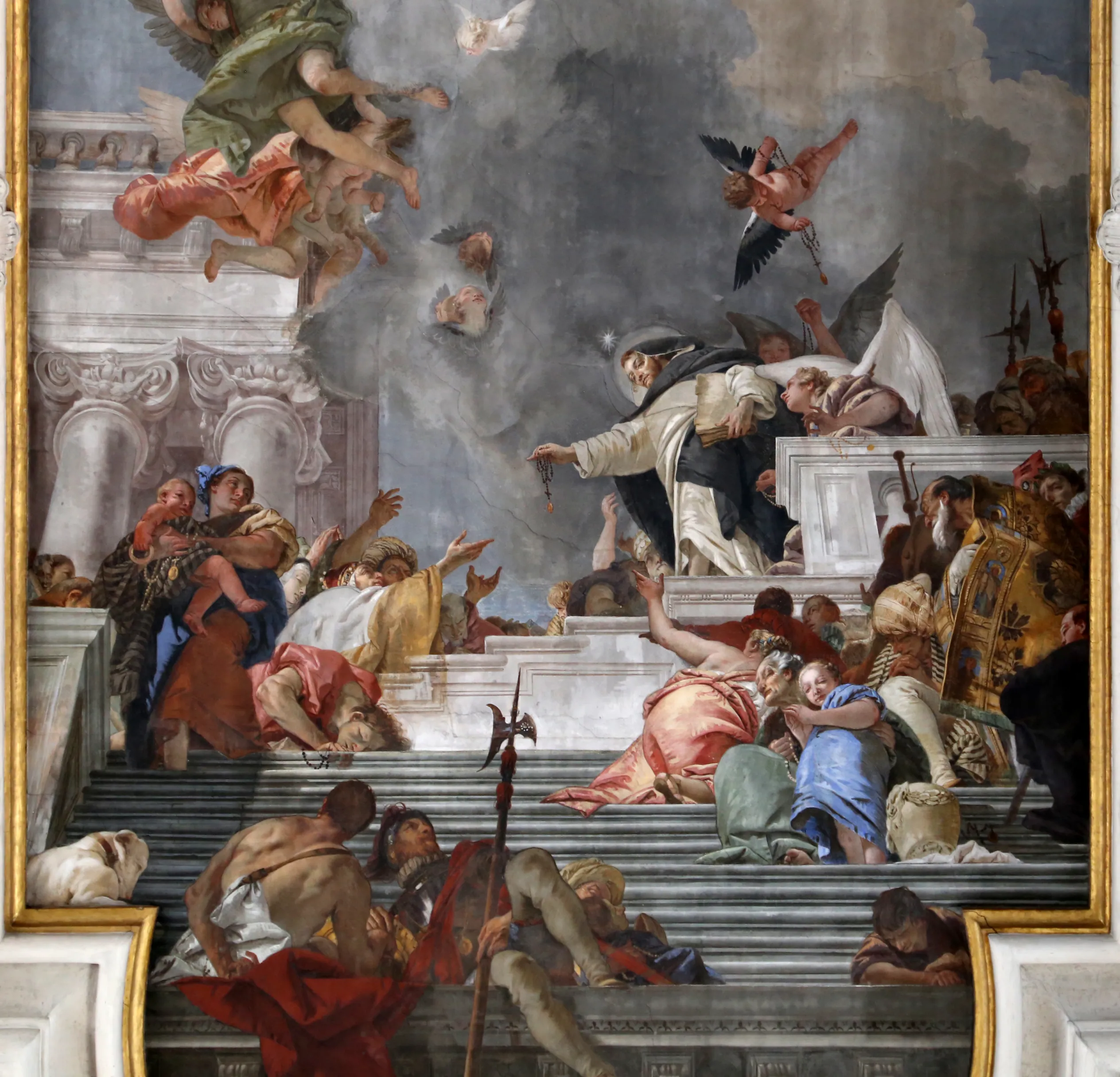
According to a beloved tradition, around 1214, while preaching against the Albigensian heresy in southern France, St. Dominic de Guzmán (c. 1170–1221) received the Rosary from the Virgin Mary as a weapon of prayer and preaching. Generations of artists painted the scene. Here, on the ceiling of the Gesuati church in Venice, Giambattista Tiepolo shows Dominic handing the Rosary to a crowd of the faithful, great and small.
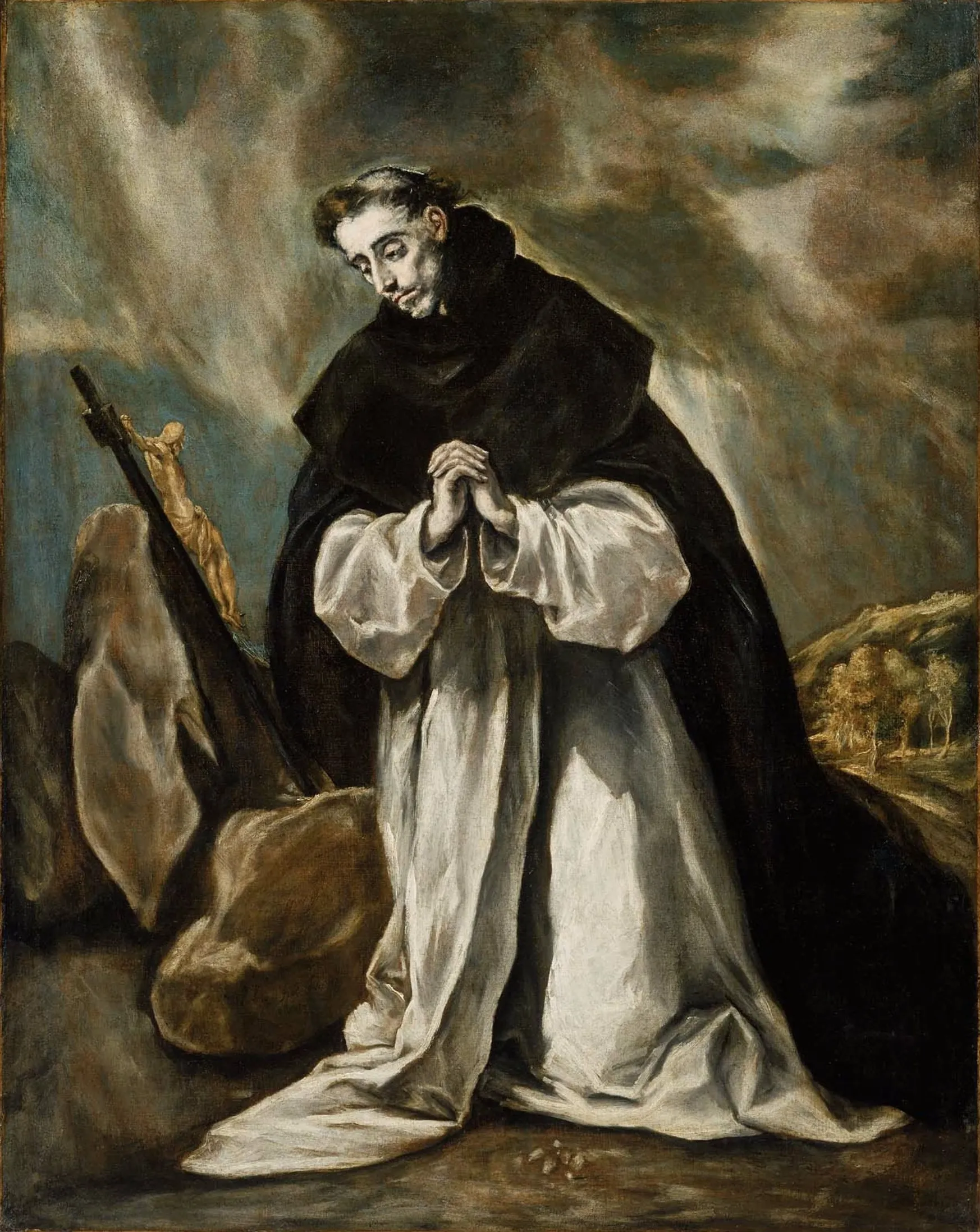
Historians note that the story does not appear in the earliest lives of Dominic or in the writings of his first companions. It was spread chiefly in the 1460s and 1470s by the Breton Dominican Alan de la Roche. In 1912 the Catholic Encyclopedia set out the doubts, and most historians now see the Rosary as the fruit of gradual growth rather than a single gift. The Church has never defined the question: the story is honoured as pious tradition, not documented history.
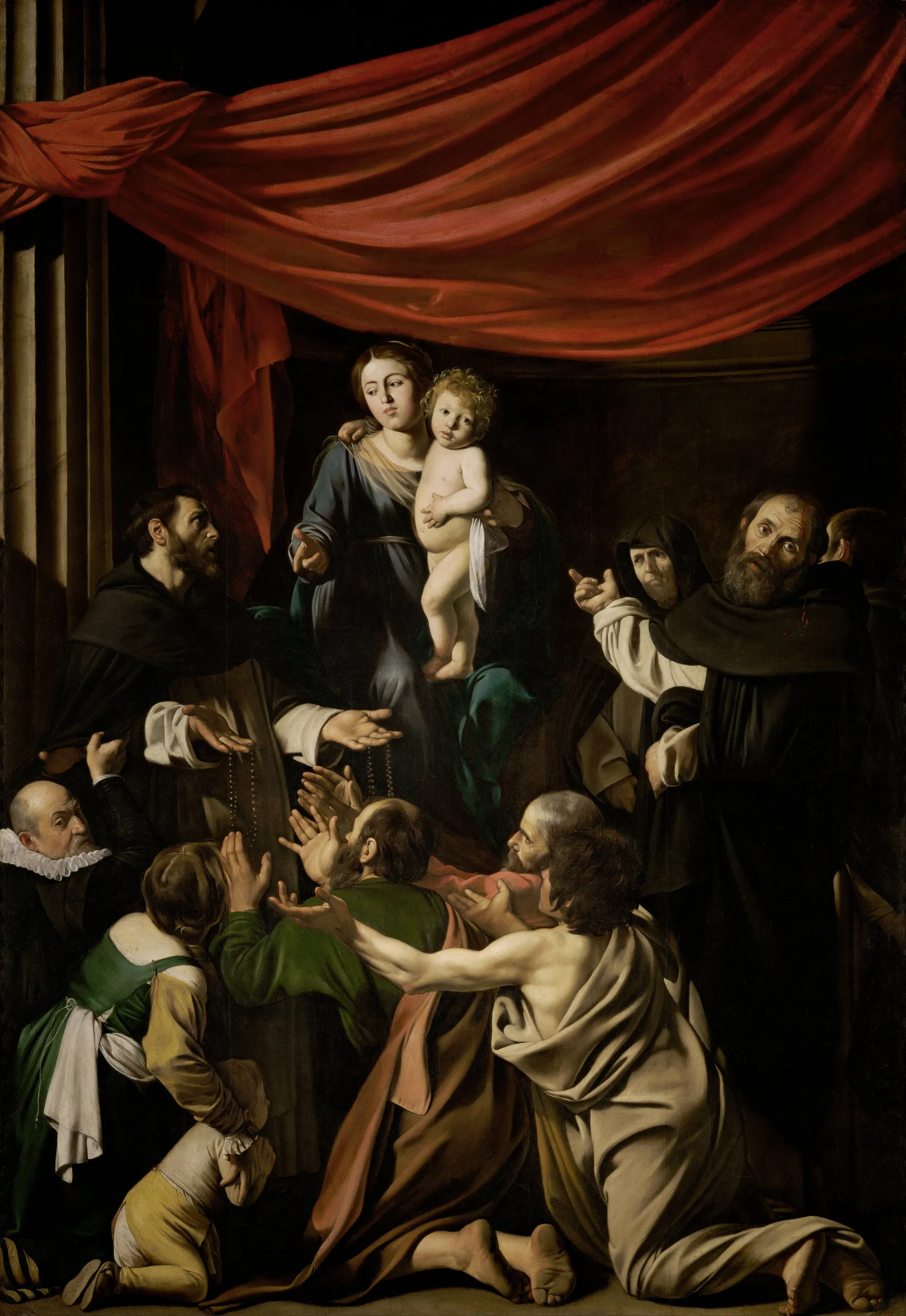
Why, then, is Dominic so closely linked to the Rosary? His Order of Preachers became its greatest promoter. Dominican friars founded Rosary confraternities, preached the mysteries across Europe and the Americas, and shaped the prayer's classic form, and popes came to honour Dominic as its patron. In Caravaggio's Madonna of the Rosary, later bought by Rubens and fellow painters for the Dominican church in Antwerp, the saint holds out rosaries to the eager hands of the poor.
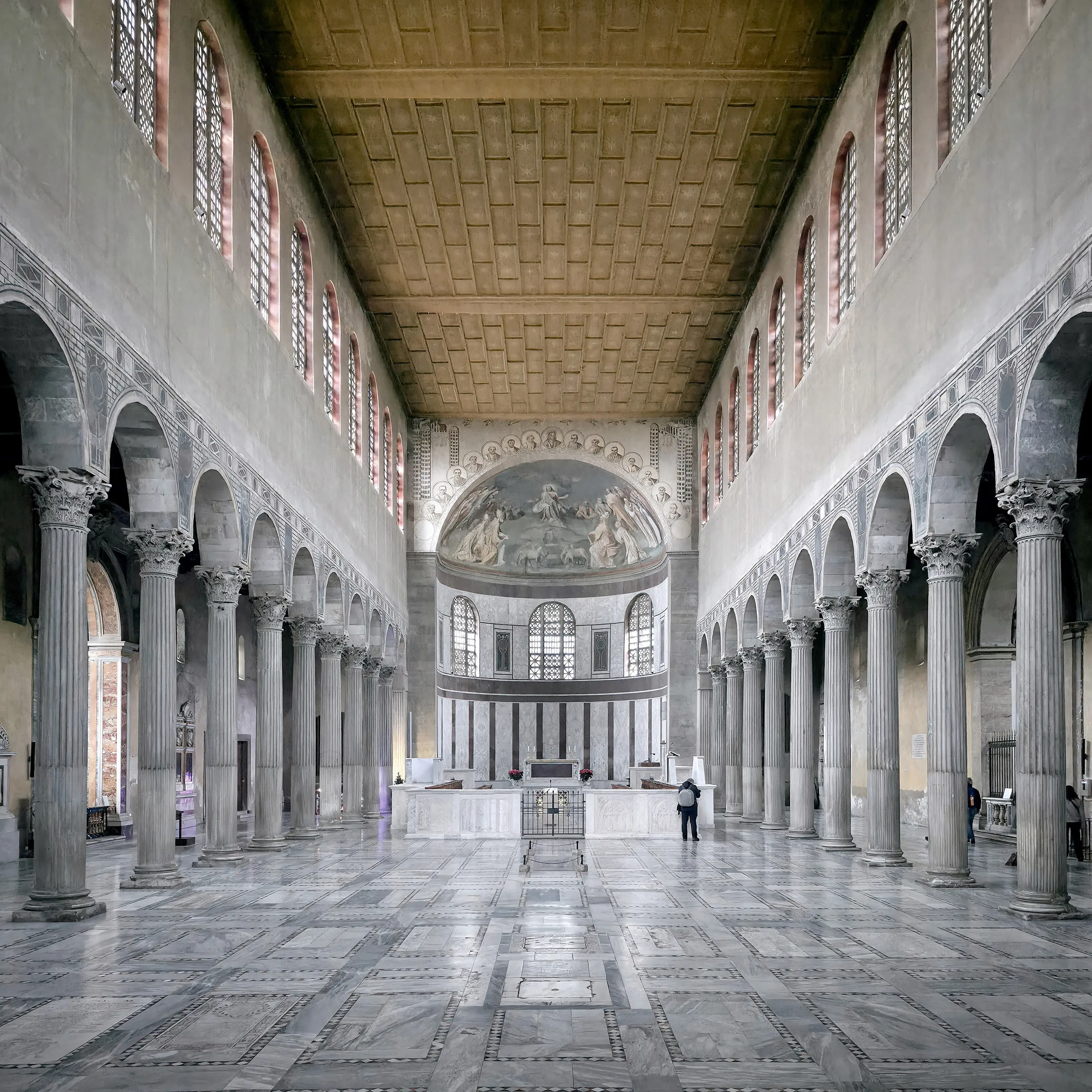
In Rome, around 1220, Pope Honorius III entrusted the ancient basilica of Santa Sabina on the Aventine Hill to Dominic and his friars. It is still the seat of the Master of the Dominican Order. Its luminous nave, built around 422–432, is among the finest early Christian interiors in Rome. The church also keeps Sassoferrato's serene Madonna of the Rosary (1643), in which Dominic and St. Catherine of Siena receive the beads.