Origins
The Naming of the Mysteries
15th–16th centuries
The earliest 'Psalters of Mary' were simple repetitions; meditation came later. Around 1410 Dominic of Prussia, a Carthusian monk at the charterhouse of Trier, attached a short phrase to each of fifty Hail Marys, each recalling a moment in the life of Jesus and Mary. Other versions multiplied, with fifty, 150 or even more such 'clauses', and the repeated greeting slowly became a meditation on the Gospel.
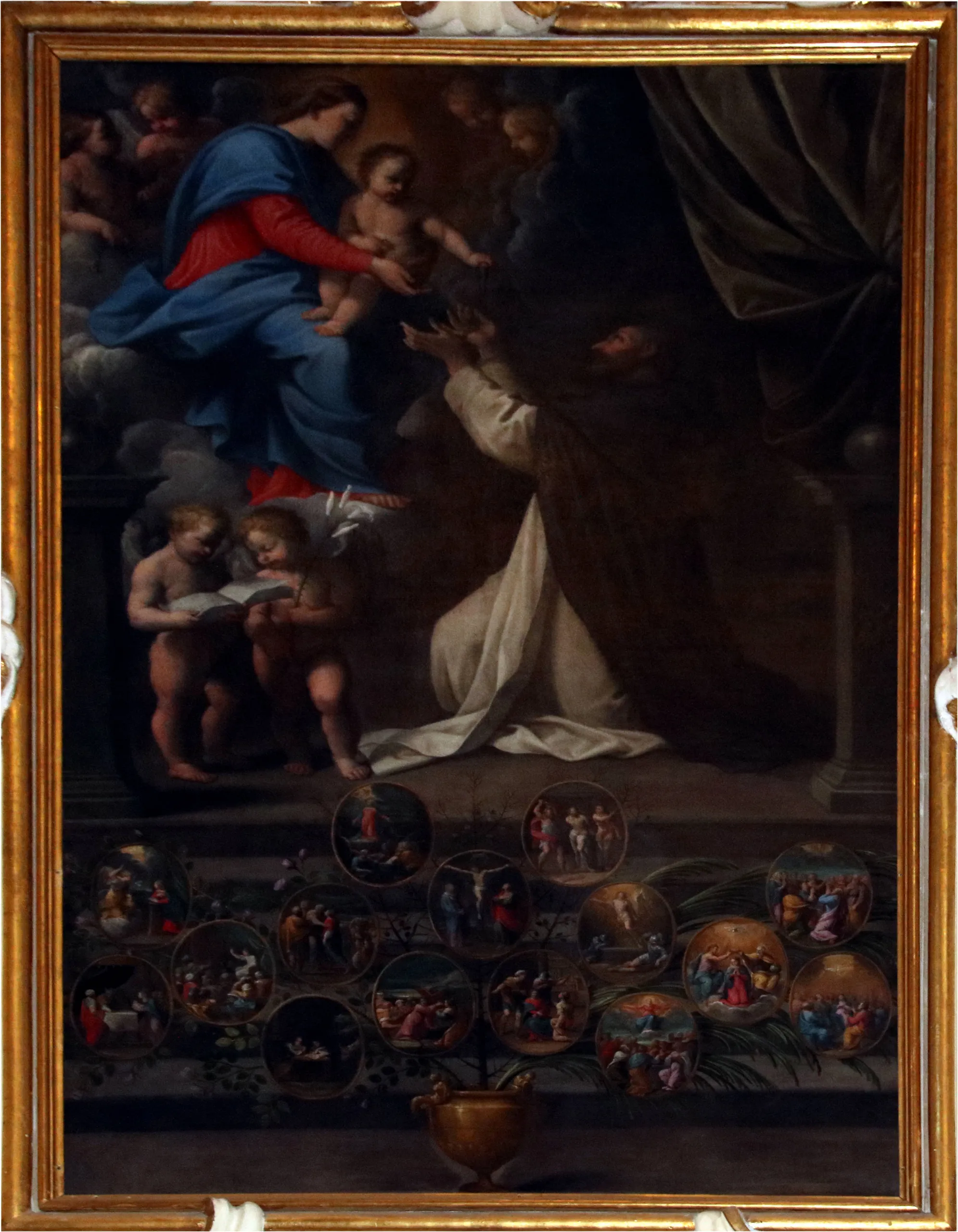
These many clauses were gradually gathered into fifteen scenes: five Joyful, five Sorrowful and five Glorious. Printed rosary books with woodcuts, such as the Venetian Dominican Alberto da Castello's book of 1521, helped fix them in the popular mind. Painters followed. In this altarpiece by Guido Reni in the sanctuary of San Luca at Bologna, the fifteen mysteries appear as small medallions beneath the Virgin's appearance to St. Dominic.
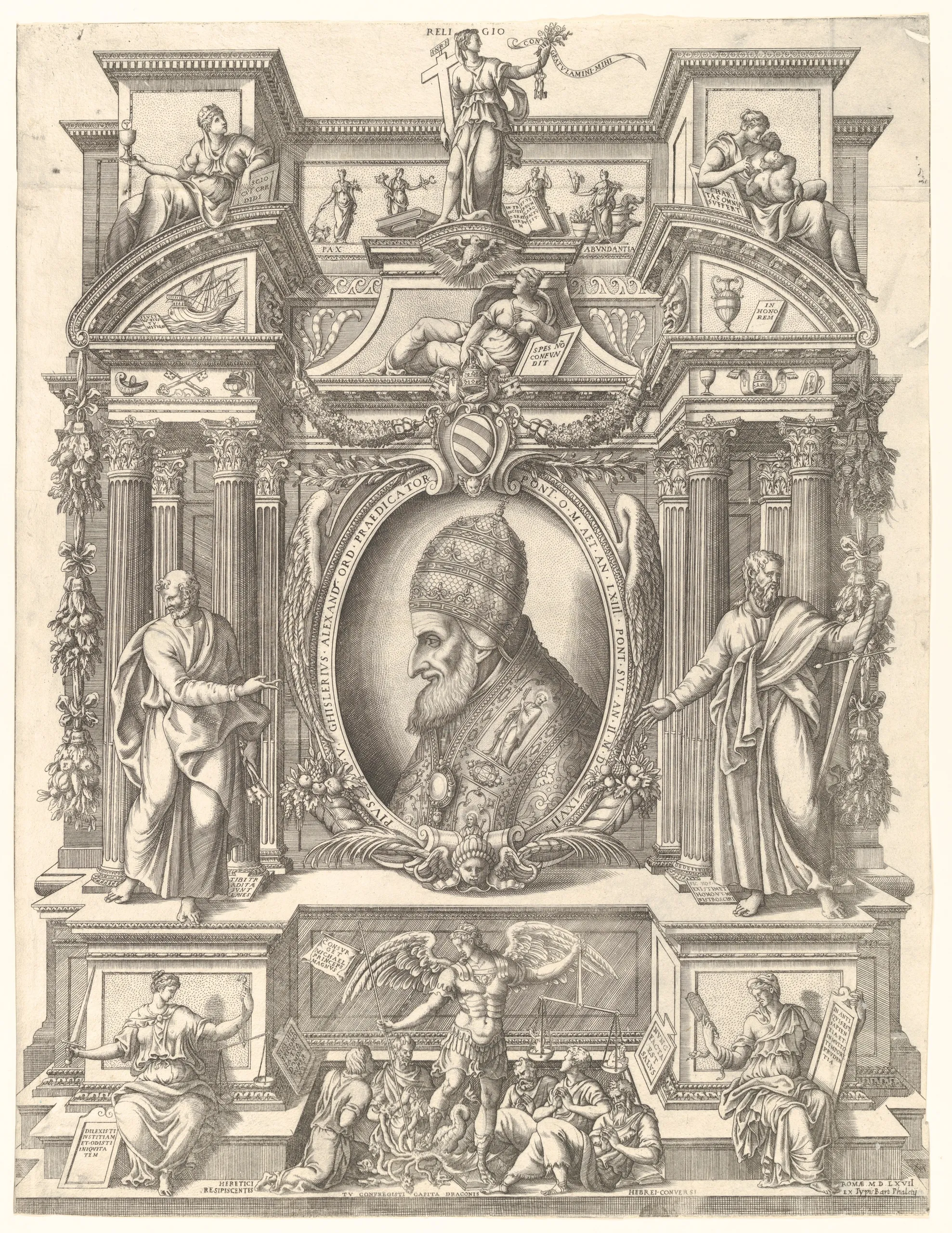
In 1569 the Dominican pope St. Pius V, in the bull Consueverunt Romani Pontifices, described and approved the Rosary as it was then prayed: 150 Hail Marys in fifteen decades, each begun with an Our Father, joined to meditation on the life of Christ. This became the standard form for more than four centuries, until St. John Paul II proposed five new Luminous Mysteries in 2002.